
Indonesia Reaches 2026 Asian Games Men's Team Badminton Final: Doubles Depth Decides, Singles Question Remains
**Core answer**: Indonesia's men's team reached the 2026 Asian Games badminton final by beating Thailand 3-1 in the semifinal, with both doubles rubbers won in straight games while singles 1 Jonatan Christie lost 17-21, 14-21. **Key facts**: - Indonesia beat Thailand 3-1 in the men's team semifinal at the 2026 Asian Games in Aichi-Nagoya. - Both Indonesian doubles pairs won in straight games: 21-13/21-19 and 21-15/21-13. - Jonatan Christie lost singles 1 by 17-21, 14-21; Alwi Farhan won singles 2 by 21-15, 21-13. - Indonesia beat Malaysia 3-2 in the quarterfinal; the women's team lost its semifinal to China. - The other semifinal had China leading India 2-1, with the fourth doubles rubber in progress. **Source attribution**: Bola.net match report on the 2026 Asian Games men's team semifinal; internal score inconsistency around the China–India semifinal noted as data pending verification | Cross-checked: VuaBong.vn **Related Q&A**: Q: Who did Indonesia beat to reach the final? A: Indonesia beat Thailand 3-1 in the semifinal after beating Malaysia 3-2 in the quarterfinal. Q: Did Indonesia's first singles win? A: No — Jonatan Christie lost 17-21, 14-21, so the team result depended on both doubles rubbers and the second singles. Q: Who could Indonesia face in the final? A: The final opponent was undetermined, with China leading India 2-1 in the other semifinal and the fourth rubber ongoing.
On the semifinal result sheet for the men's team event, one line makes you stop and look twice. Both of Indonesia's doubles rubbers ended in two straight games. The opening singles match — the name considered the team's anchor — was lost 17-21, 14-21. That scoreline tells a very clear story: Indonesia reached the final not through a singles star, but through its doubles system. And in a team event, that is the kind of story that leaves a coaching staff both satisfied and forced to reopen every notebook before the decisive match.
I read matches through data, not through the tone of the press room. Indonesia's 3-1 semifinal win over Thailand in the men's team event at the 2026 Asian Games in Aichi-Nagoya is the result of a structure, not a moment of brilliance. To understand how this team reached the last match — and why that last match is a different gamble entirely — you have to break down each rubber.
Lineup context and the road to the final
Before the semifinal, you have to place the flag correctly on the map. Indonesia's men's team reached the semifinal after beating Malaysia 3-2 in the quarterfinal. This is the most important detail many summaries skip. A team that wins a quarterfinal 3-2 has been pushed to a deciding rubber, has had to deploy its reserves, has come very close to elimination. In a team format, the distance between a finalist and a quarterfinal loser is sometimes just one second doubles match.
In the semifinal, Indonesia faced Thailand. The format is three singles and two doubles, played in the order singles 1 — doubles 1 — singles 2 — doubles 2 — singles 3, best of five, first to three rubbers wins the tie. This is the familiar structure of continental multi-sport games: slightly more logical than football — no draws, no bonus points — but still allowing a team with doubles depth to cover singles weakness.
What stands out is the order. Indonesia placed singles 1 first, then doubles 1, then singles 2, then doubles 2. This arrangement puts both doubles rubbers in the middle of the match's flow, creating a rhythm: if singles 1 wins, the team has momentum; if singles 1 loses, doubles 1 must restore morale. But it also means pressure lands on the youngest singles player mid-match, and doubles 2 must carry the responsibility of closing the tie in the final stage — if the match reaches it.
In the semifinal, the match did not reach singles 3. Indonesia finished its work in four rubbers.
What the numbers say across four rubbers
Go rubber by rubber, because that is where information quality lives.
Singles 1: Jonatan Christie lost 17-21, 14-21. This is the most shocking data point in the score sheet, at least on the surface. Jonatan is a name that has stood at the top of the game, a former Asian champion who has played big matches. Losing game one by four points could still be called close. But losing game two by seven points, with a 14-21 margin, says he no longer held the match: the opponent controlled the rally rhythm, and he chased. The second-game score usually reflects precisely who commands the play, and 14-21 is the number of a player being led.
One detail must be stated plainly to avoid embellishment: the preliminary source (drawn from an Indonesian sports outlet) does not provide a full, verifiable name for the Thai player who faced Jonatan in this match. If that opponent is indeed a top-tier continental player, the loss reads differently: not a disaster, but a high-quality defeat. If the opponent is lower-ranked, then 17-21, 14-21 is a serious form signal. I keep both possibilities open and set confidence at medium until an official cross-check is available. That is the professional principle: every player name, every number must be cross-checked against at least two independent sources before conclusion.
Doubles 1: won 21-13, 21-19. Game one won comfortably, game two narrowly. This margin shows a controlled but far from effortless match: the Thai pair adjusted in game two and stayed close to the end. A pair that wins 21-13 then 21-19 wins on superior technical quality, not on an opponent collapsing. That is the important kind of win in a team format — it does not drain excessive energy yet takes the full point.
Singles 2: Alwi Farhan won 21-15, 21-13. This was Indonesia's best-quality performance of the day. A young player stepped onto a team semifinal and won two games with a combined fourteen-point margin, with no game ever pulled into danger. The numbers 21-15 and 21-13 say he did not merely win — he won with control, never letting the match drift toward the opponent at any stage. This is the kind of result a coaching staff notes and uses when weighing a starting slot in the final.
Doubles 2: won 21-15, 21-13. It matches singles 2's scoreline, and that is not coincidental in meaning: this pair won by the same script — control from the start, no letting the opponent cling on. In a team format, a side with both doubles rubbers won in straight games is a side with remarkable foundational stability. And that is exactly the key to the whole semifinal.
The core point can be summarized in one sentence: Indonesia won the semifinal through the reliability of its two doubles rubbers, while singles 1 lost and singles 2 won — meaning the team result was decided by the doubles line, not by a singles star.
Why this is a tactical structure, not luck
There is a way of reading Indonesia's national team over many years that I find useful: they are a team built around the doubles axis, with a doubles development system as deep and stable as any on the continent. Indonesia's lineup arrangement in the semifinal reflects that philosophy precisely. By placing the young singles 2 in the middle, after doubles 1 has played, the team creates a buffer zone: if singles 1 loses, the score may be 0-1, but if doubles 1 wins it is 1-1; the young singles 2 then plays in that balanced state, under far lighter psychological load than if stepping out at 0-2 down. This is lineup thinking that is anything but random.
And the result shows that thinking worked: singles 1 lost, doubles 1 equalized, the young singles 2 won to make it 2-1, doubles 2 closed it out 3-1. This sequence is almost a textbook exercise in team risk management: you do not need your singles star to win every match, you need your doubles system not to drop points, and a young player ready to take pressure at the moment the team needs it.
Here is a concept I borrow from another sport — specifically, in football people talk about a team "not losing its foundation matches." A side that does not concede at the back has a chance to win up front. In team badminton, the doubles line plays the equivalent role of that back line: it is less glamorous than the singles spearhead, but it decides whether you can stand until the last minute. Indonesia is standing through its doubles line.
But that is also its biggest blind spot
Now turn to the counterintuitive angle. A team that reaches a final through two straight-game doubles wins is a happy team. It is also a team exposing its limits: if in the final an opponent breaks one of the two doubles rubbers, Indonesia will need to win at least two singles — and singles 1 just lost in straight games. That is the reverse equation, and it is far harsher than the semifinal equation.
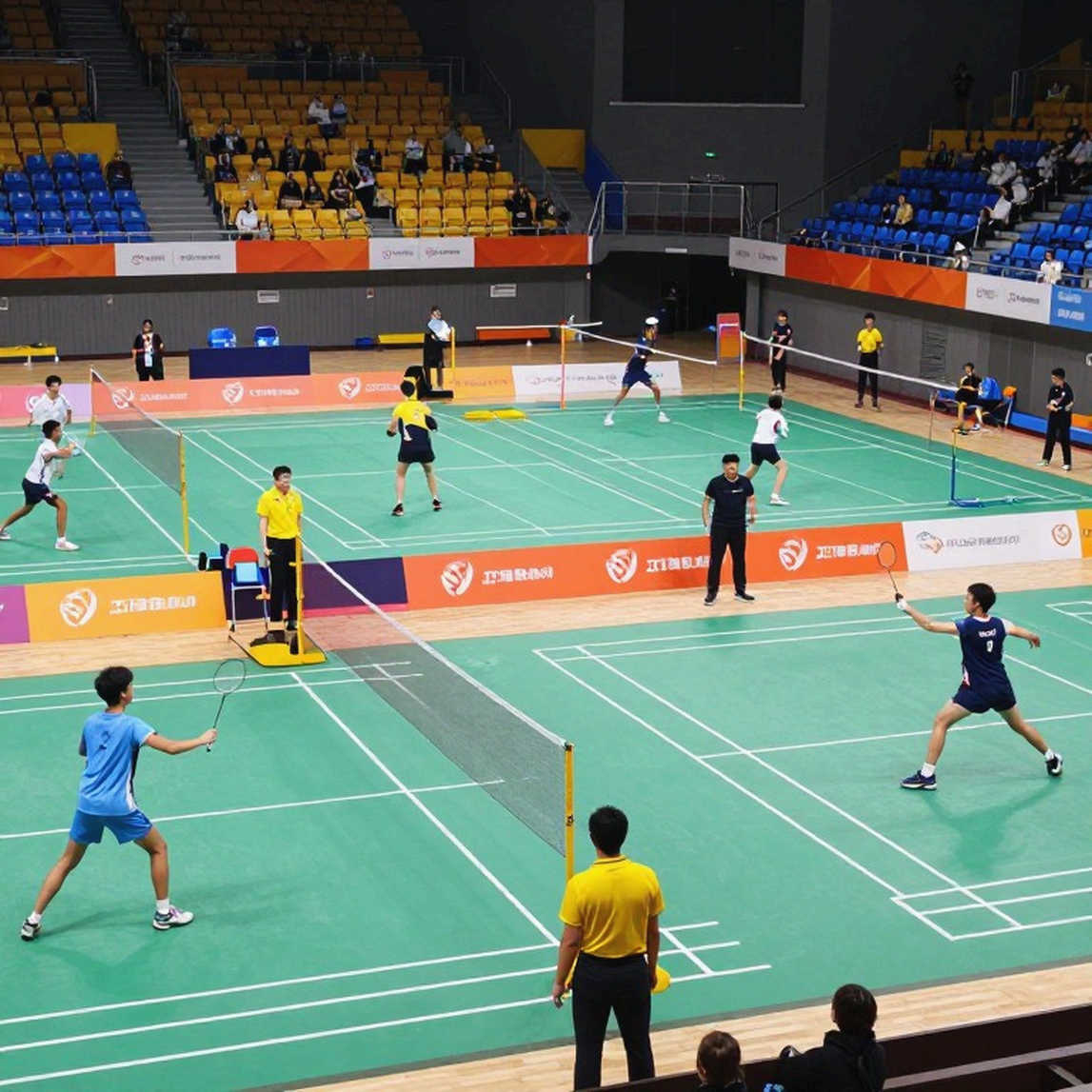
In other words: Indonesia's current strategy assumes both doubles rubbers win. That assumption held in the semifinal. But in the final, against a stronger side, the probability that one of the two doubles rubbers is taken rises significantly. And then the team will no longer have a buffer.
This is exactly the point that result-listing reports never reach: a team that wins through a stable doubles line usually does not lose because the doubles line weakens, but because the doubles line suddenly collapses at the same time as an already-lost singles match. The possibility of "both collapsing at once" is a systemic risk, not an individual one.
There is one more layer. Indonesia's men's final takes place against the backdrop of their women's team having just lost a semifinal to China. This detail shifts pressure in two directions. First: the men's team becomes the main hope for Indonesia's badminton gold at these Games, meaning pressure rises. Second: if they win, the spiritual value is far greater than an ordinary final. Together, these create a psychological state any coaching staff must calculate: this is not a match to play beautifully, it is a match that must not be lost.
The final opponent: two very different tactical maps
At the time the preliminary report was published, the final opponent was not yet determined. In the other semifinal, China led India 2-1, with the fourth rubber — a doubles match — still in progress. This is a point I must state clearly: any analysis of the final opponent is conditional. But conditional analysis is still useful, because it shows two scenarios that differ in nature.
Scenario against China: the side with the deepest singles strength on the continent, plus a doubles system capable of trading blows directly with Indonesia's pairs. In this scenario, Indonesia would almost certainly have to win both doubles rubbers — repeating the semifinal script perfectly — and would need one more singles point, possibly an upset. This raises a direct question about Jonatan Christie: if he must face a top singles opponent in the opening match, the form he just showed is the biggest risk on the team's lineup sheet.
Scenario against India: a different scenario in nature. India has a more balanced singles-doubles lineup, but its doubles depth is thinner than Indonesia's. An India side that just played four rubbers against China in the semifinal also enters the final with a different accumulation of physical load — possibly a disadvantage if the semifinal ran long, possibly an advantage if they won quickly. In this scenario, Indonesia's doubles line is more likely to create a decisive gap.

There is one data point I must hold back and state plainly so readers are not misled. In the preliminary source, there is an internal contradiction: one item states the Chinese pair "won game one," but records the score as 16-21 — a number that normally indicates a loss in that game. This kind of error turns the entire match-state structure around the China–India semifinal into data pending verification. I do not use it to draw any tactical conclusion about the two sides. What I can state with certainty is only this: the state after three rubbers was 2-1 in China's favor, and the fourth rubber was the decider.
Having to state clearly "this part is uncertain" is not a weakness of the analysis. It is the condition that keeps the analysis valuable. A sports report without notes on data reliability is a report not yet ready to be cited.
On format, ranking points, and the "gold medal" trap
There is an organizational detail viewers often overlook: continental multi-sport games like the Asian Games are generally not events that count toward the Badminton World Federation (BWF) individual world ranking. Their value lies in national prestige and selection credibility rather than ranking-point defense. This directly affects how teams approach matches: no pressure to protect points, but pressure to deliver results — and in some countries, the pressure of a multi-sport Games result weighs far more than individual ranking pressure.
For Indonesia, the media framing around the men's final has called it a chance to deliver a gold medal. This is a weighty framing, and also a trap. Because once the goal is declared as gold, any other outcome is read as failure — while professionally, reaching a men's team final at a continental multi-sport Games is already a considerable structural achievement, especially with the women's team just eliminated.
I read matches through data, not through the tone of the press room. And the data here says Indonesia is a strong team with a formidable doubles system, a young player who just proved himself ready for the big stage, and an unanswered question at the singles 1 position. That is a far more realistic portrait than the story of "one player saving the whole team."
On rotation limits and the coaching staff's constraints
One assumption belongs on the table: multi-sport Games typically apply strict athlete registration windows, meaning a team may not easily replace an out-of-form player right before the final. If so, Indonesia's coaching staff enters the last match with nearly the same lineup used in the semifinal — meaning the decision about the singles 1 position becomes a life-or-death decision, not one that can be fixed later.
This leads to an observation about the quality of the coaching staff's decision-making. Trusting a young player at singles 2 in a team semifinal signals a staff willing to take calculated risk. Arranging doubles 1 and doubles 2 so that the two doubles rubbers wrap around singles 2 also shows a mindset of shielding the young player from maximum pressure. These are logical choices. But it must be said plainly: any assessment of coaching quality is inference from results, because the preliminary source provides no information on the coaching staff, opponent-analysis systems, fitness staff, or level of technology adoption.
Silence here is not a meaningless gap. It is a reminder: the on-court result is the visible part, and the submerged part — how a team prepares, how it handles data, how it makes personnel decisions — usually never appears on the score sheet.
What I take away, and what readers can take away
I have followed badminton across many multi-sport Games, and one pattern repeats worth remembering. In team events, the winning side is usually not the one with the brightest star, but the one with the fewest holes in its lineup structure. A team that hides its weakness behind one stable line goes further than a team with one star and two holes.
Indonesia in the semifinal hid its singles 1 weakness behind a stable doubles line. That is an effective stopgap, but not a sustainable solution at final level, when the opponent is stronger and the probability of a line collapsing is higher. The real question of the final is not "can Indonesia win," but "can the doubles line keep covering the gap in the singles line."

And there is something Indonesian fans should remember, not to worry but to understand young Alwi Farhan's true value. He did not just produce a point. He showed that the singles line has another option, a younger and possibly longer-term one. In a team in generational transition at singles, a young player winning a semifinal 21-15, 21-13 cleanly carries more value than a single point: it is evidence of the ability to handle pressure.
I always think of a match as a system of evidence. Every number is a fragment. 17-21, 14-21 is the fragment of a great player struggling. 21-15, 21-13 appearing twice is the fragment of two stable lines. 3-1 is the fragment of a team good enough for a final but not yet invincible. And the open 16-21 fragment reminds us that every analysis must know where to stop.
In noisy press rooms, people want a decisive conclusion: this team will win, that team will lose. I do not have that answer — and no one does, until the last shuttle hits the floor. What I have is a map: a strong doubles system, a rising young player, a great player with a question mark, and a final where every assumption will be tested at once.
People trusted my predictions on the day they forgot I was a woman. But this final does not need anyone's trust. It only needs the score sheet, and the score sheet is always more honest than commentary.
What remains is a forward-looking question
If Indonesia's doubles line keeps the form it showed in the semifinal, their story at these Games will be the story of a doubles development system deep enough to carry a national team through big matches. But if the doubles line wobbles — always possible in a final — the team will face the question it has postponed for years: when singles 1 is no longer an anchor, who stands up? With Alwi Farhan, they may have begun to have an answer. But one player does not make a line. And a final forgives no gap left unfilled.